The living room hosts the widest range of life in the house — conversation, film nights, reading, work. The decorating goal is a room that rearranges itself around people instead of around the television.
Arrange seating for conversation
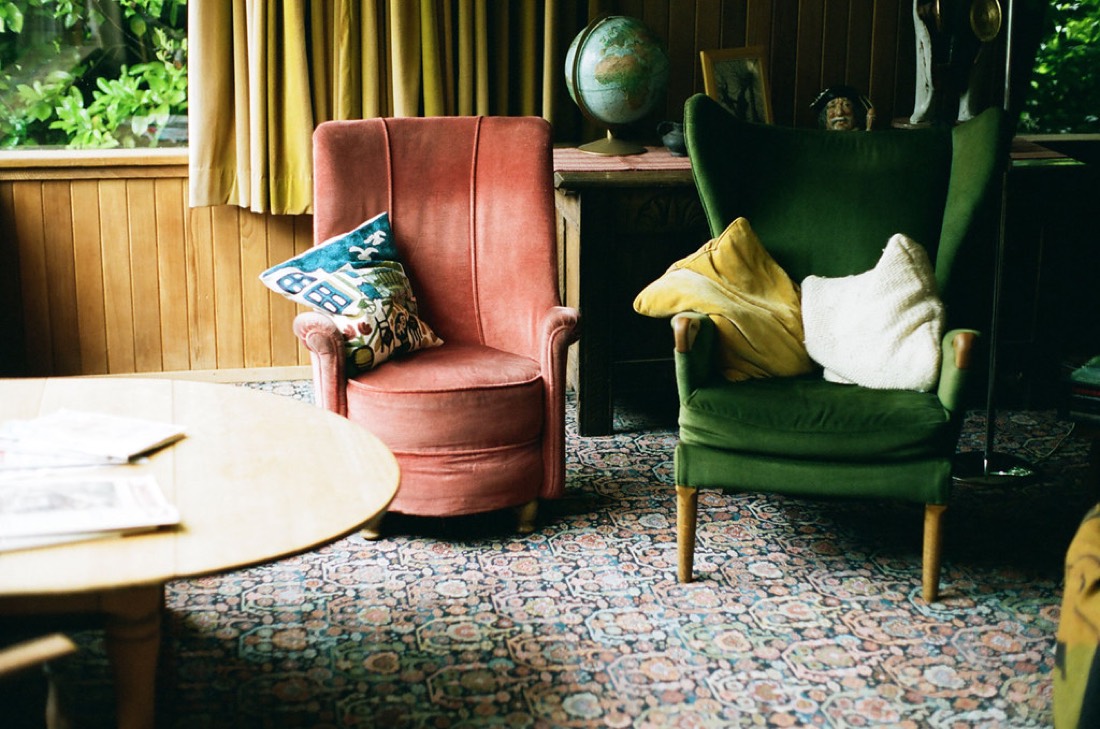
Pull the sofa off the wall. Seats facing each other across a coffee table, no more than about 2.4 m apart, make talking effortless; a rug large enough to sit under the front legs of every seat ties the group into one zone. In open-plan spaces, use the rug and a console table behind the sofa to mark the boundary.
Three layers of light
Overhead light alone makes a living room feel like a waiting room. Add floor lamps beside reading chairs, table lamps on sideboards, and dimmable ceiling light for cleaning and gatherings. As a rule of thumb, a comfortable living room has light sources at three different heights.
Build colour with the 60-30-10 rule
Let roughly 60% of the room be a quiet base (walls, large rug, sofa), 30% a supporting tone (curtains, armchairs, wood), and 10% the accents that carry personality — cushions, throws, art. Accents are the cheapest layer to change with the seasons, so be brave there and conservative everywhere else.
Texture is the second colour
- Mix at least three materials — wool, linen, wood, metal, ceramic — so flat colour still feels rich.
- Hang curtains high and wide so the window reads larger.
- One large piece of art anchors a wall better than a scatter of small frames.
The one rule that matters most
Arrange the seats for the people, not the screen. If conversation works in the layout, everything else is styling.