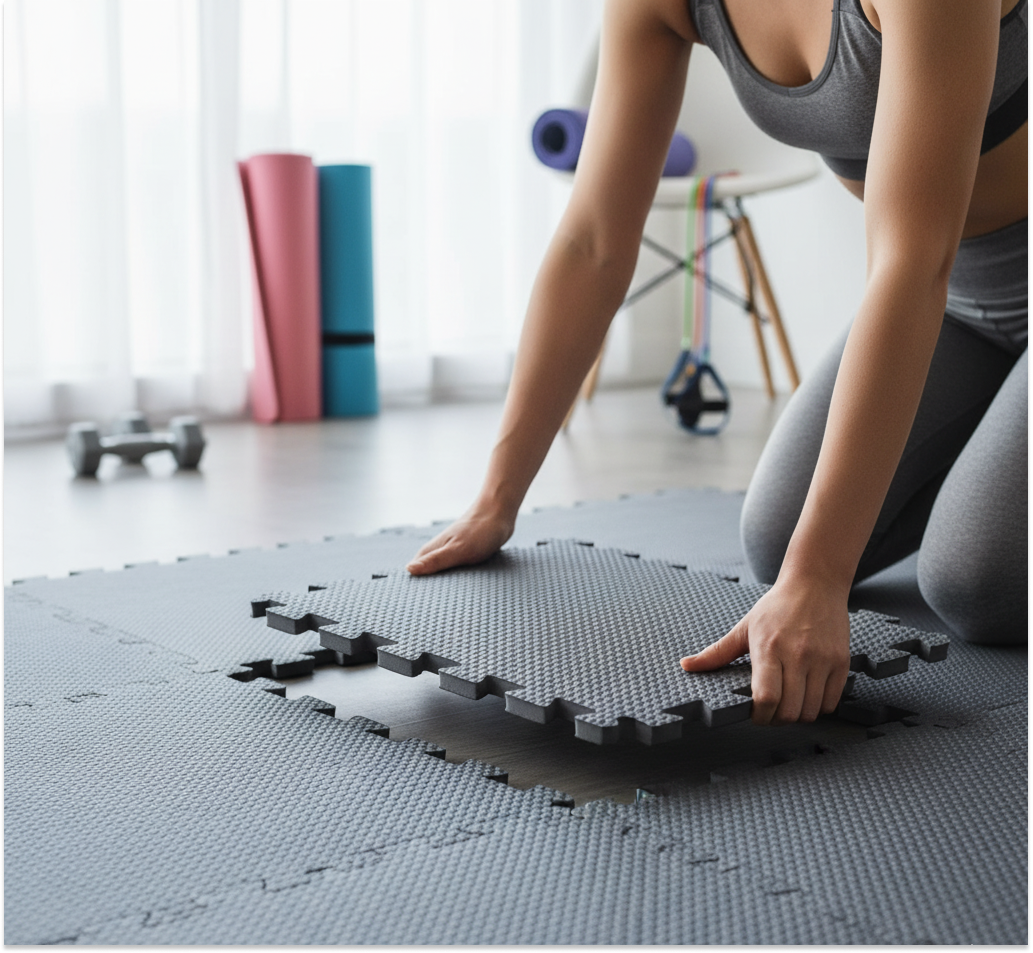
So, you’re ready to transform that spare room or garage into your personal fitness sanctuary? That’s fantastic! But before you start loading up on dumbbells and treadmills, let’s talk about a crucial, often overlooked, element: your home gym flooring. The right home gym flooring isn’t just about aesthetics; it’s about safety, performance, durability, and protecting your subfloor.
Choosing the best flooring for a home gym can be a bit overwhelming with all the options out there. Don’t sweat it – we’re here to break down everything you need to know to make an informed decision for your ideal workout space.
Why Does Home Gym Flooring Matter?
Think about it: your floor will absorb impacts from dropped weights, provide stability for heavy lifts, cushion your joints during high-intensity interval training (HIIT) or cardio, and stand up to the constant wear and tear of a dedicated workout space.
Key benefits of proper home gym flooring include:
- Impact Absorption: Protects your subfloor from damage and your equipment from shattering.
- Joint Protection: Reduces stress on your knees, ankles, and hips during exercises.
- Safety & Stability: Provides a non-slip surface, crucial for preventing accidents.
- Noise Reduction: Dampens sound, which is great for multi-story homes or shared living spaces.
- Durability: Stands up to heavy use, spills, and sweat.
- Hygiene: Easier to clean and maintain than traditional residential flooring.
1. Rubber Flooring: The Heavyweight Champion
When people think of gym flooring, rubber is often the first thing that comes to mind, and for good reason! Rubber gym flooring is incredibly durable, offers excellent shock absorption, and provides fantastic grip. It’s the go-to choice for serious lifters and commercial gyms alike.
Pros:
- Superior Durability: Resists heavy impacts, abrasions, and tears.
- Excellent Shock Absorption: Ideal for weightlifting areas, protecting both floors and equipment.
- Non-Slip Surface: Safe even when wet with sweat.
- Sound Dampening: Reduces noise significantly.
- Easy to Clean: Simply wipe down.
Cons:
- Odor: New rubber can have a strong smell initially, which dissipates over time.
- Weight: Can be heavy, making installation a two-person job.
- Cost: Generally more expensive upfront, but a long-term investment.
2. Foam Flooring: The Budget-Friendly & Versatile Choice
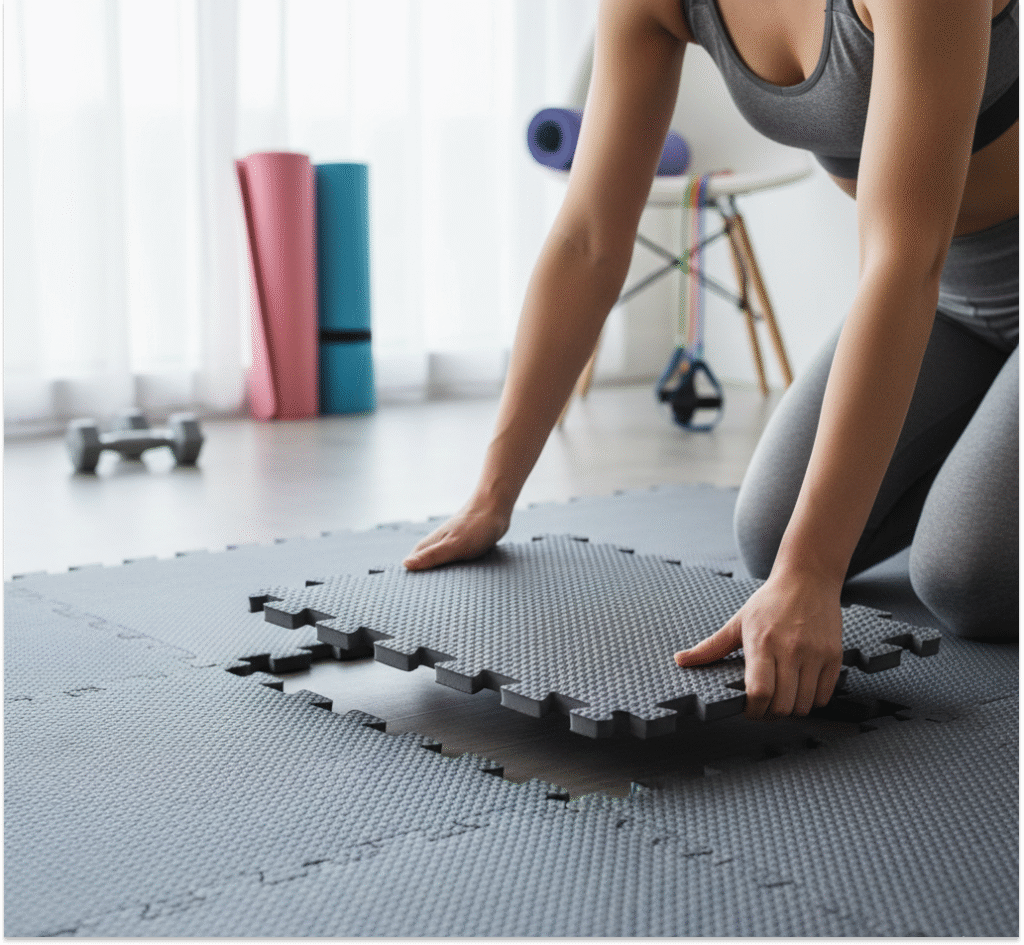
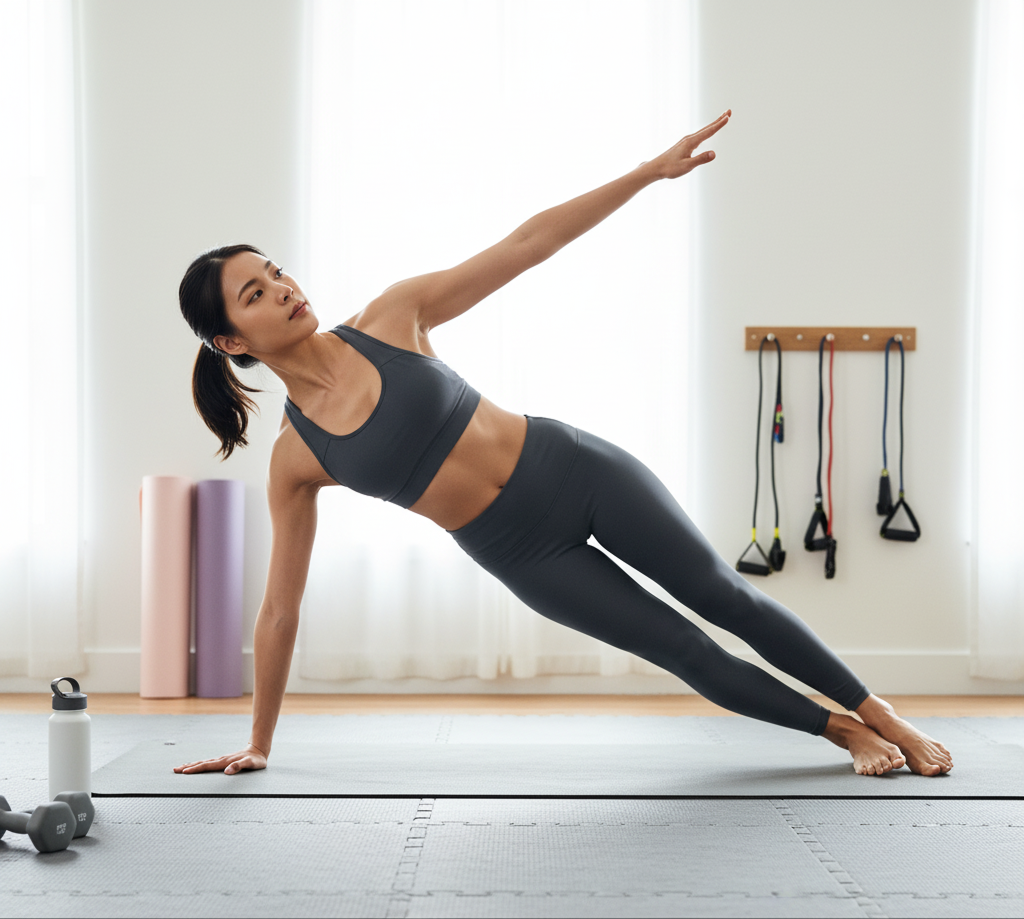
Foam interlocking tiles, often made of EVA foam, are a popular choice for home gyms due to their affordability, ease of installation, and decent cushioning. They are an excellent option for bodyweight exercises, yoga, Pilates, and light cardio.
Pros:
- Affordable: One of the most cost-effective home gym flooring solutions.
- Easy Installation: Lightweight and simple interlocking design.
- Good Cushioning: Comfortable for floor exercises and light impact.
- Portable: Can be easily moved or stored away.
Cons:
- Less Durable: Not ideal for heavy weights or high-impact activities; can indent or tear.
- Less Shock Absorption: Doesn’t protect subfloors as well as rubber.
- Not as Slip-Resistant: Can become slippery when wet.
Best For: Yoga, Pilates, stretching, bodyweight exercises, light cardio.
3. Turf/Artificial Grass: For Sleds and Functional Training
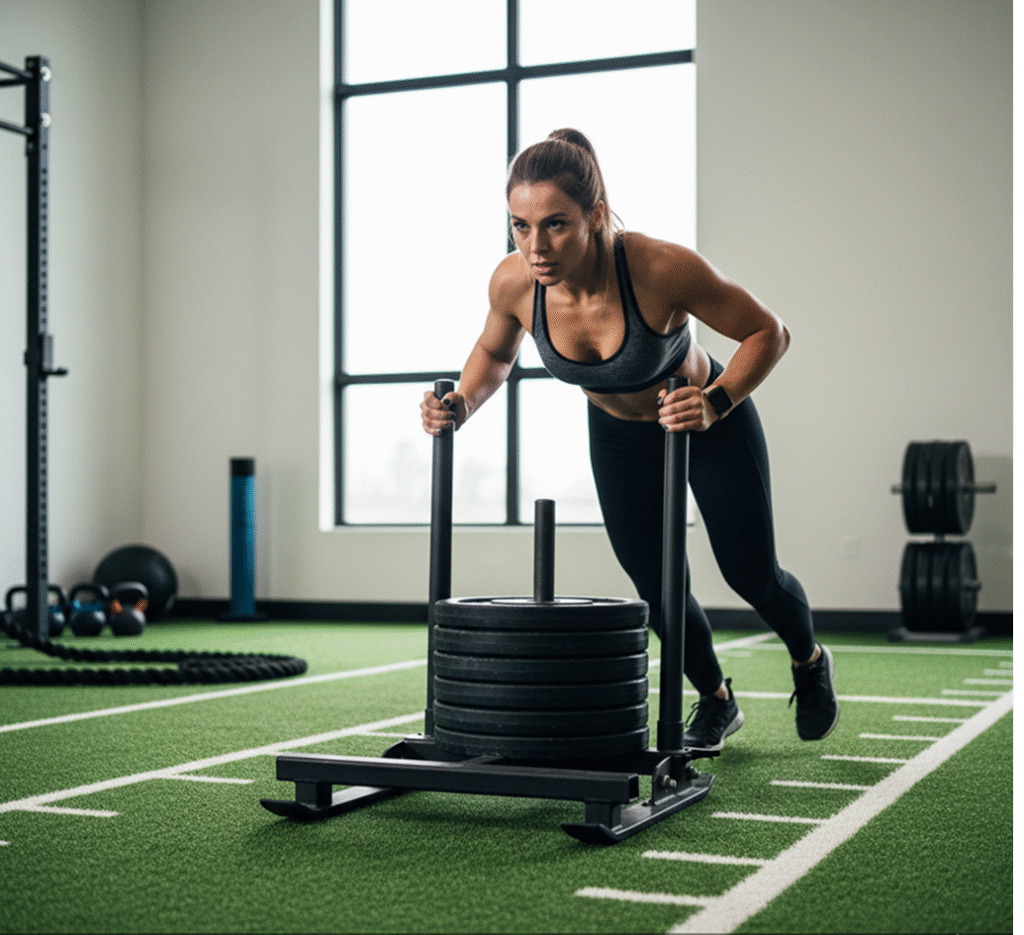
Want to bring some outdoor training vibes indoors? Artificial turf is gaining popularity in home gyms, especially for functional fitness, sled pushes, sprints, and agility drills. It provides a unique surface that’s low-friction for dragging equipment but still offers good grip.
Pros:
- Unique Training Surface: Excellent for sled pushes, sprints, and tire flips.
- Durable: Resists heavy use and scuffing.
- Aesthetic: Creates an energetic, professional gym look.
- Low Maintenance: Easy to vacuum.
Cons:
- Less Cushioning: Not ideal for heavy weight drops or high-impact cardio.
- Cost: Can be more expensive than other options.
- Installation: May require professional installation for larger areas.
Best For: Functional training, sled work, agility drills, sprints.
4. Vinyl Plank Flooring: A Stylish and Practical Option
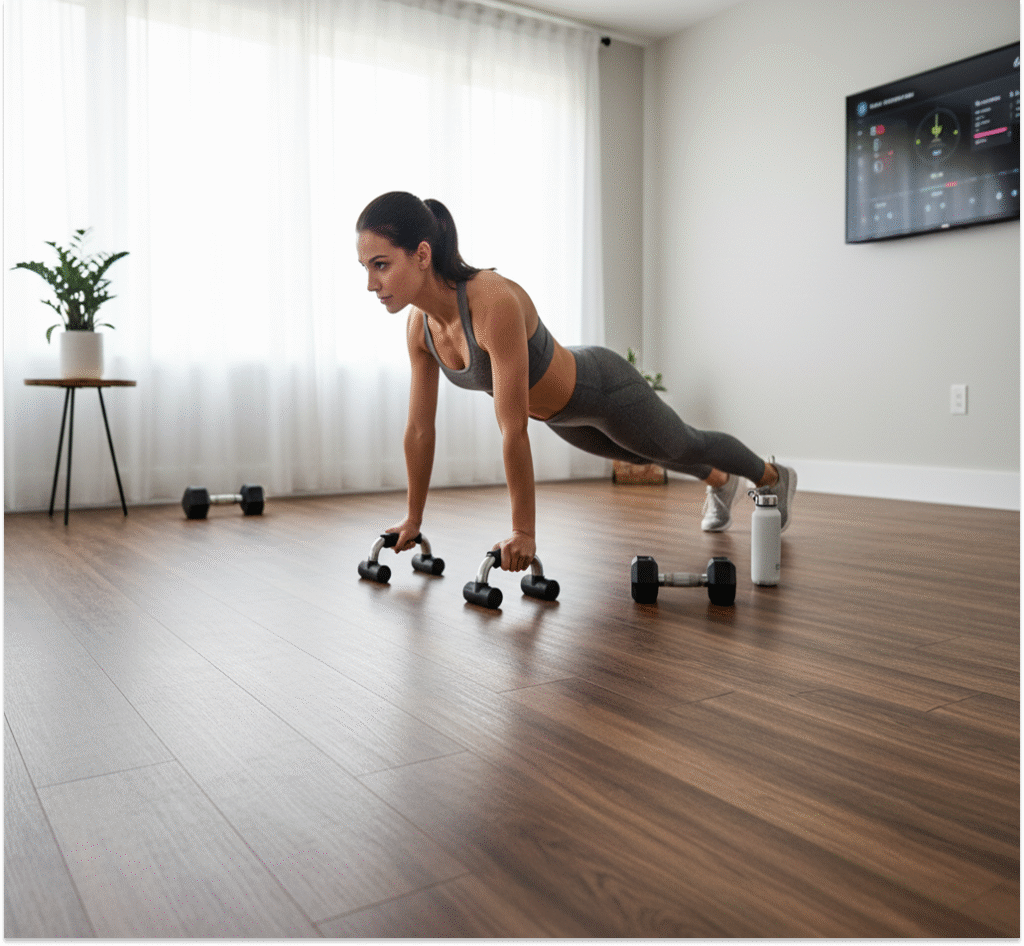
If you want your home gym to look a little less industrial and more integrated with your home’s aesthetic, luxury vinyl plank (LVP) flooring can be a great choice. It’s waterproof, durable, and offers a good balance of firmness and slight give. While not as shock-absorbent as rubber, it’s far better than bare concrete or hardwood for general fitness activities.
Pros:
- Aesthetic Appeal: Available in a wide range of styles, mimicking wood or stone.
- Waterproof: Excellent for sweat and spills.
- Durable: Resists scratches and scuffs from light equipment.
- Easy to Clean: Simple to sweep and mop.
Cons:
- Less Impact Absorption: Not suitable for heavy weight drops without additional mats.
- Slippery When Wet: Can be more slippery than rubber.
Best For: Light cardio, bodyweight, general fitness areas where aesthetics are important.
5. Cork Flooring: Eco-Friendly Cushioning and Style
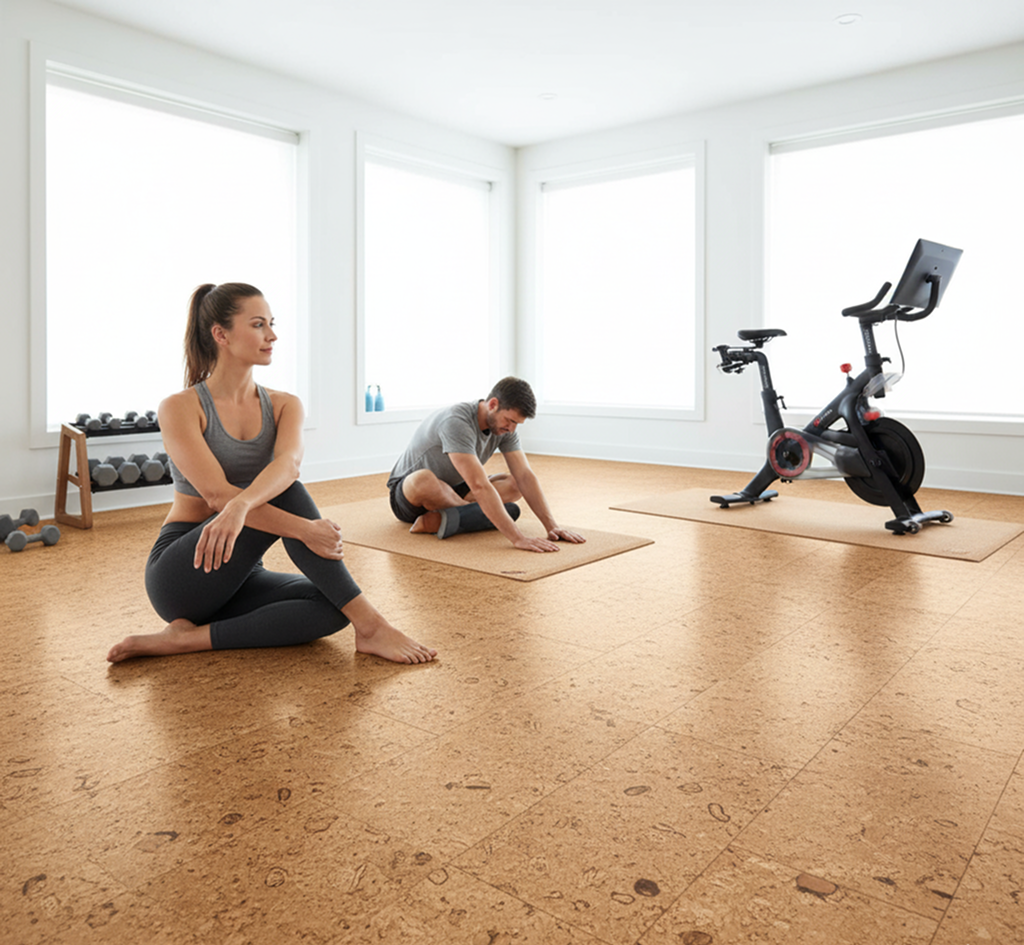
For those seeking an eco-friendly and naturally resilient option, cork flooring offers a unique blend of benefits for a home gym. Made from the bark of cork oak trees, it’s naturally antimicrobial, water-resistant, and provides excellent thermal and acoustic insulation. It offers a moderate level of cushioning, making it comfortable for bodyweight exercises and light to moderate cardio.
Pros:
- Eco-Friendly: Sustainable and renewable resource.
- Natural Cushioning: Comfortable underfoot, good for joint support during low to moderate impact.
- Antimicrobial & Hypoallergenic: Resists mold, mildew, and common allergens.
- Sound & Thermal Insulation: Great for noise reduction and maintaining room temperature.
- Attractive: Unique, natural aesthetic that can warm up a space.
Cons:
- Less Durable than Rubber: Can be susceptible to dents from heavy, dropped weights or sharp objects.
- Water Damage: While water-resistant, prolonged exposure to standing water can cause damage.
- Cost: Can be pricier than foam or some vinyl options.
- Maintenance: May require sealing to protect against moisture and wear.
Best For: Yoga, Pilates, light to moderate cardio, stretching, and home gyms where eco-friendliness and aesthetics are a priority.
Final Rep: Make the Right Flooring Choice for Your Home Gym
Investing in the best home gym flooring is just as important as choosing your weights or cardio machine. It’s an investment in your safety, your home, and your long-term fitness journey. Consider your workout style, budget, and the specific needs of your space to select the ideal gym flooring.
With the right gym floor, you’ll be well on your way to a functional, safe, and motivating home gym that you’ll love for years to come!