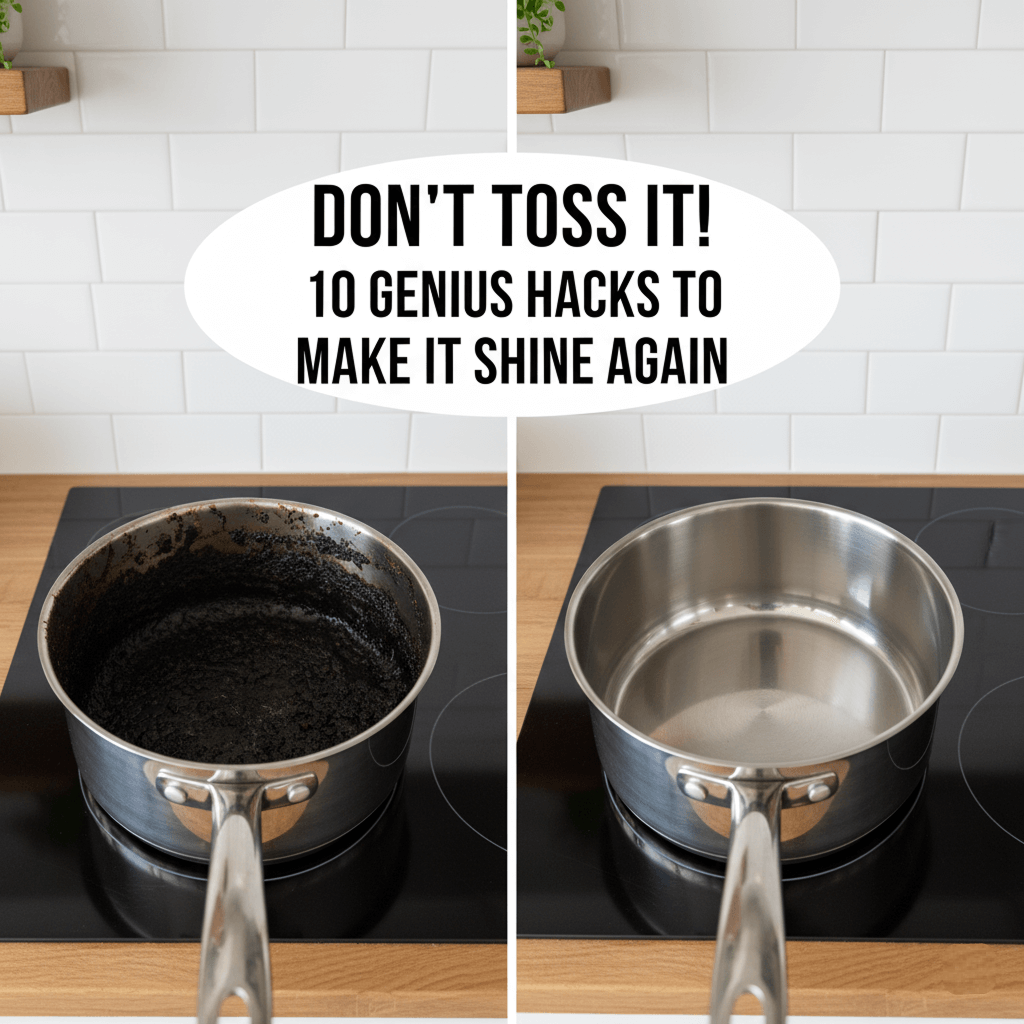
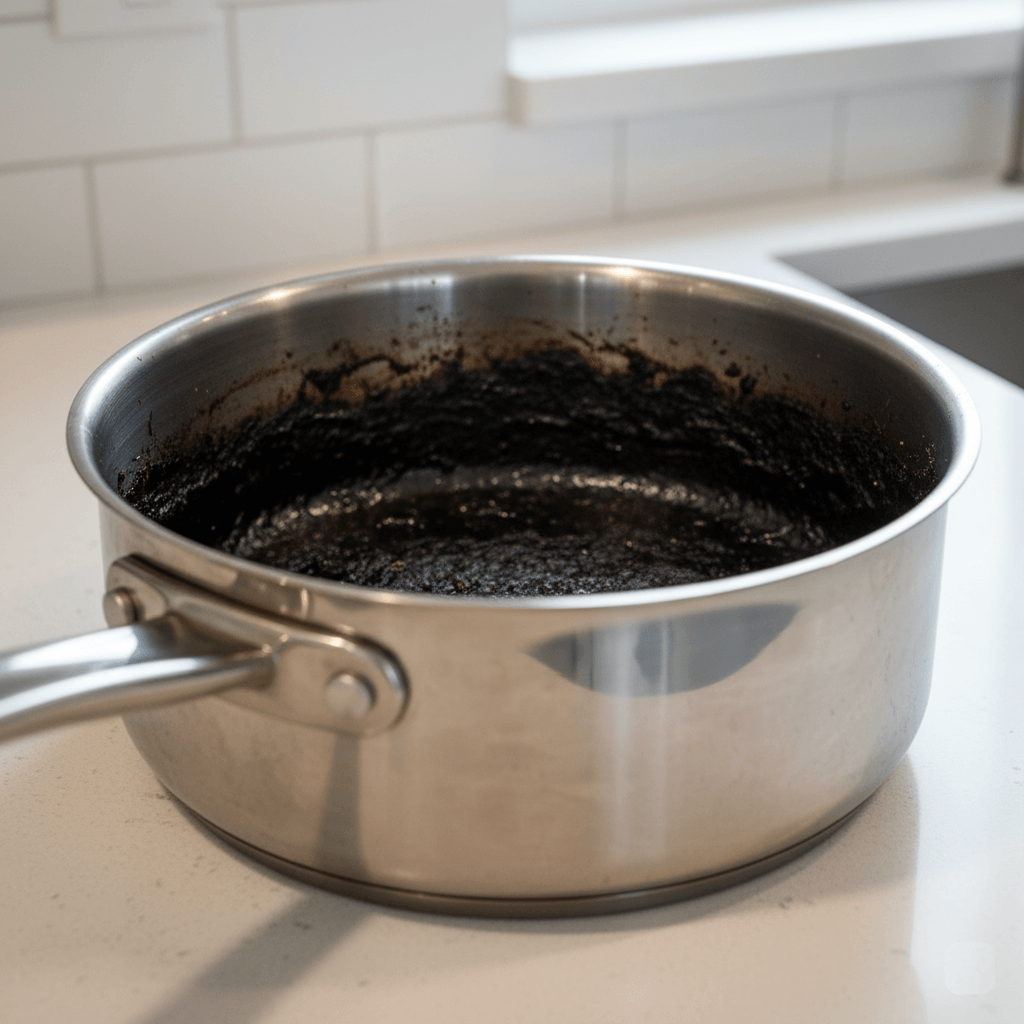
We’ve all been there. You get distracted for a moment—a phone call, a knock at the door—and you return to the kitchen to find a smoky haze and a tragically burnt pot. Your first instinct might be frustration, followed by the temptation to just hide it in the cupboard and deal with it “later.”
Many of us have given up on a scorched pan, either scrubbing endlessly with no results or simply throwing it away. But what about that beautiful stainless steel pot? It’s too good to waste. With the right technique, you can make it look brand new.
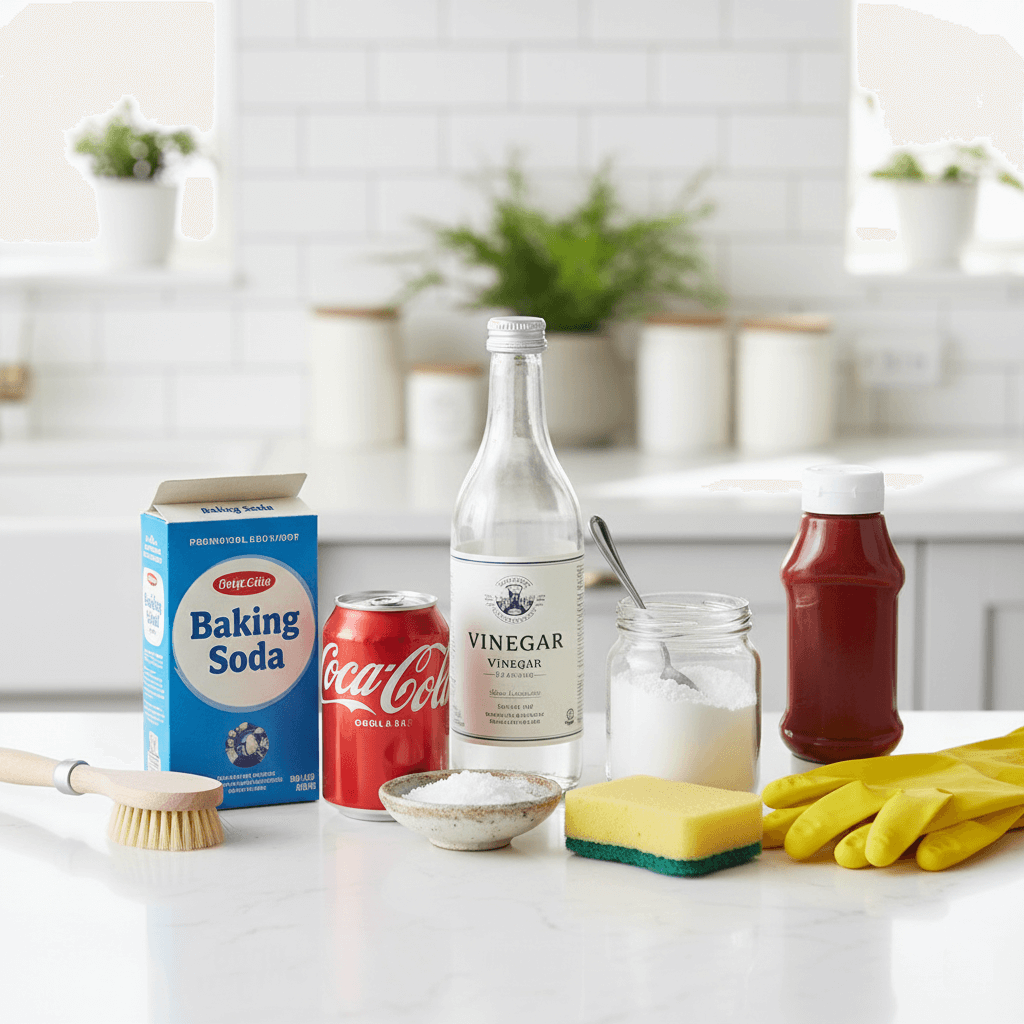
Your go-to move might be to grab a steel wool scrubber and use some serious elbow grease. But stop right there! This method can create deep scratches on the pot’s surface, which can not only ruin its finish but potentially cause harmful substances to leach into your food later.
The good news is there’s a better way. You can easily remove those stubborn burnt-on messes using simple, everyday items you probably already have in your home.
Ready to save your cookware? Here are 10 effective and easy methods for cleaning a burnt pot.
1. The Baking Soda Power-Scrub
This is a classic for a reason. Baking soda is a mild alkali that is excellent at breaking down grease and burnt food particles.
What You’ll Need:
- Baking Soda
- Water
Instructions:
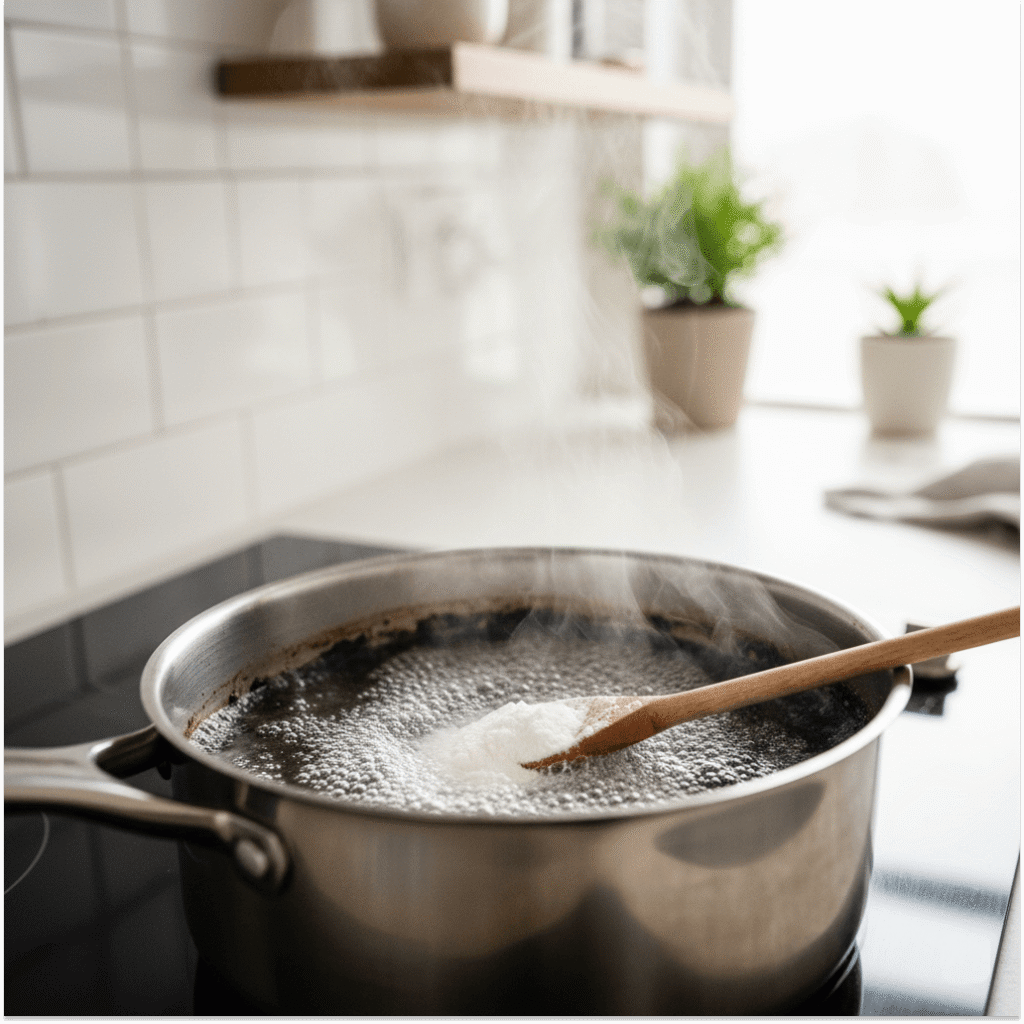
- Pour a generous layer of baking soda into the bottom of the pot.
- Add enough water to create a thick paste, or add more water to cover the burnt area completely.
- Place the pot on the stove and bring the water to a boil. Let it simmer for 15-20 minutes.
- Turn off the heat, let it cool, and then use a sponge or soft scrubber to wipe away the loosened residue.
No time to boil? Simply let the baking soda and water mixture soak in the pot overnight. For extra-stubborn spots, use a bit of dry baking soda on a damp sponge as a gentle abrasive. I’ve personally used this method, and it works like a charm.
2. The Cola Trick
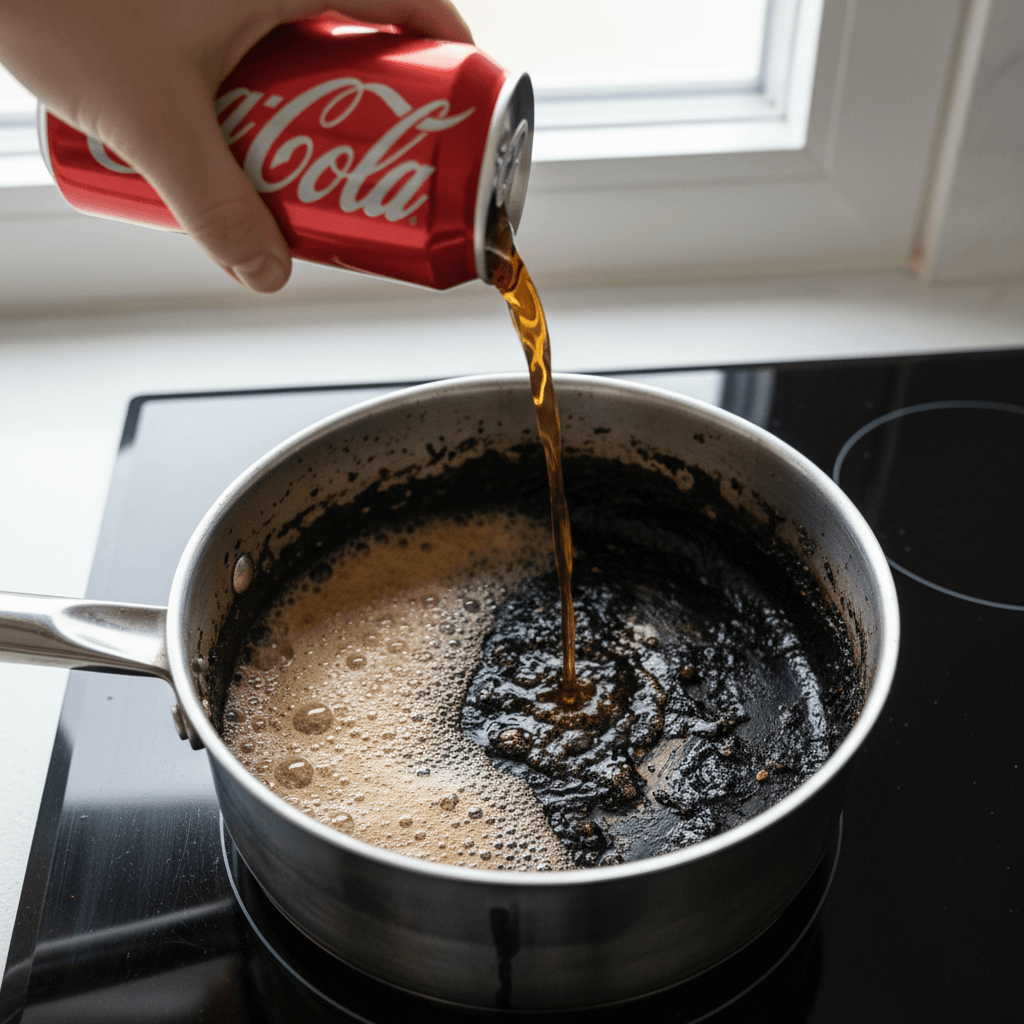
It sounds strange, but it works! The phosphoric acid in cola is highly effective at dissolving burnt-on grime.
What You’ll Need:
- Cola
Instructions:
- Pour enough cola into the pan to cover the burnt section.
- Place it on low heat and let it simmer for about 30 minutes. Be careful not to let it boil over.
- The burnt bits should start to lift. Use a wooden spoon or spatula to gently scrape them away as it simmers.
- Once cool, wash as usual. Some people even have success mixing cola and toothpaste into a paste for scrubbing.
3. Simple Dish Soap Soak
For minor burns, this is your first line of defense. Don’t underestimate the power of a good, long soak.
What You’ll Need:
- Dish Soap
- Water
Instructions:
- Fill the pot with water and a few generous squirts of dish soap.
- Bring the soapy water to a boil, then let it cool completely.
- Use a non-abrasive sponge to scrub the area.
- If the burn remains, let the pot soak overnight and try again in the morning.
4. Cream of Tartar Paste
You might not have this in your pantry, but it’s a secret weapon for tough cleaning jobs. Cream of tartar is an acidic salt that works wonders on burnt stains.
What You’ll Need:
- Cream of Tartar
- Water
Instructions:
- Mix a small amount of water with a few tablespoons of cream of tartar to form a thick, spreadable paste.
- Coat the burnt area evenly with the paste.
- Let it sit overnight. The next day, you should find that the burnt layer has dried and can be lifted or scrubbed off, almost like a flakey crust.
5. Leftover Wine
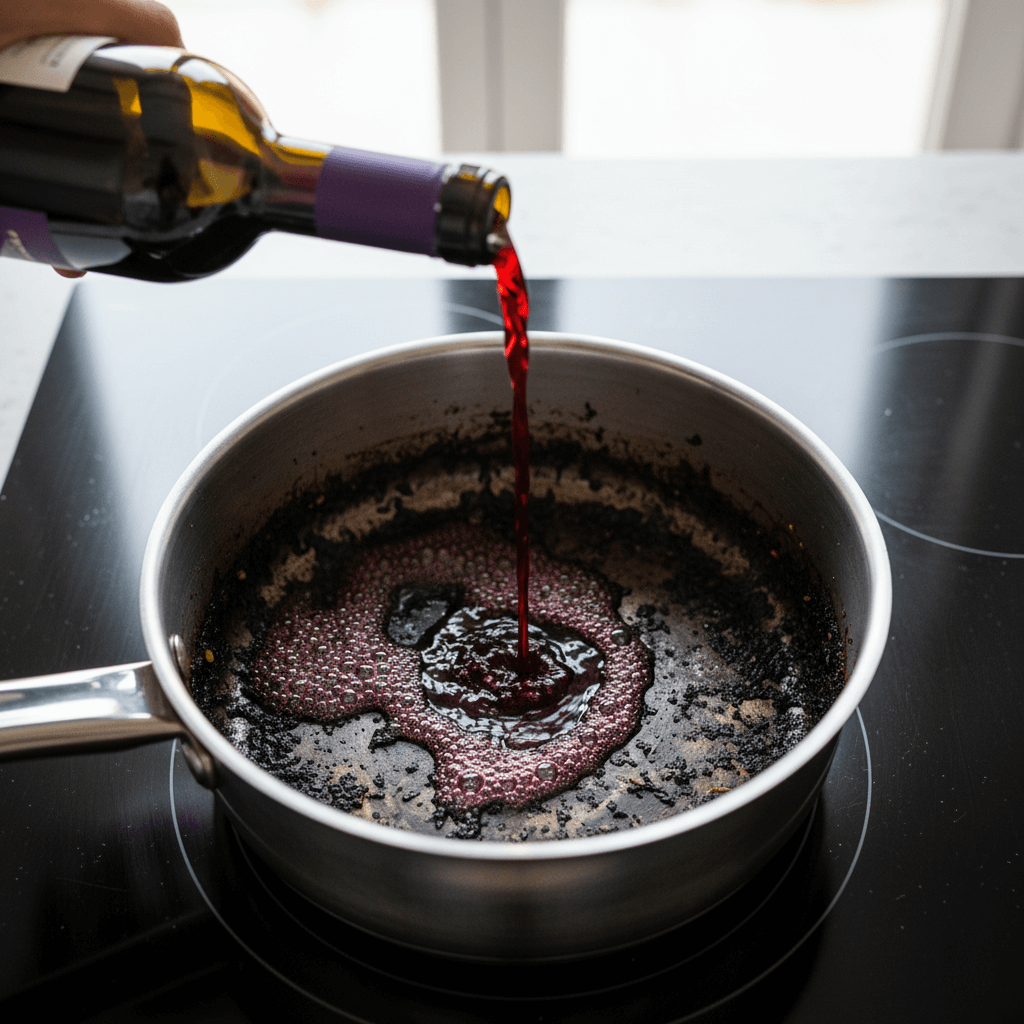
Don’t pour that last bit of wine down the drain! Like vinegar, the acid in wine can help break down stubborn residue.
What You’ll Need:
- Leftover wine (red or white)
Instructions:
- Pour a small amount of wine into the pot, just enough to cover the bottom.
- Let it soak for a few hours.
- Gently scrub the pot. The acid in the wine will have loosened the burnt particles, making them easier to clean.
6. Oxygen Bleach (Sodium Percarbonate)
For heavy-duty burns, oxygen bleach is one of the most effective solutions I’ve ever tried. It releases oxygen bubbles when mixed with water, which actively lifts stains.
What You’ll Need:
- Sodium Percarbonate (Oxygen Bleach powder)
- Hot water
Instructions:
- Sprinkle one or two tablespoons of oxygen bleach powder into the pot.
- Carefully pour hot water over the powder. It will start to fizz.
- Let it soak for at least an hour, or overnight for severe burns.
- Rinse thoroughly and wash with soap and water. You’ll be amazed at the results.
7. The Salt Method
Good old-fashioned salt can act as a gentle but effective abrasive to lift stuck-on food.
What You’ll Need:
- Salt (coarse salt works best)
- Water
Instructions:
- Add a good amount of water to the pot along with a few tablespoons of salt.
- Bring the saltwater to a boil, stirring with a wooden spoon.
- As it boils, gently scrape the bottom of the pot with the spoon. The burnt bits should start to come loose.
- If stubborn spots remain, repeat the process with a higher concentration of salt.
8. Ketchup for External Burns
This method is surprisingly effective, especially for the scorched, brownish stains on the outside bottom of your pots and pans. Ketchup’s acidity works wonders.
What You’ll Need:
- Ketchup
Instructions:
- Apply a generous layer of ketchup to the burnt or discolored surface.
- Let it sit for at least 30 minutes, or even overnight for the best results.
- Scrub with a non-scratch sponge and rinse. The shine will be restored.
- For interior burns, you can gently simmer a layer of ketchup (add a little water if it’s too thick) to speed up the process.
9. The Vinegar Boil
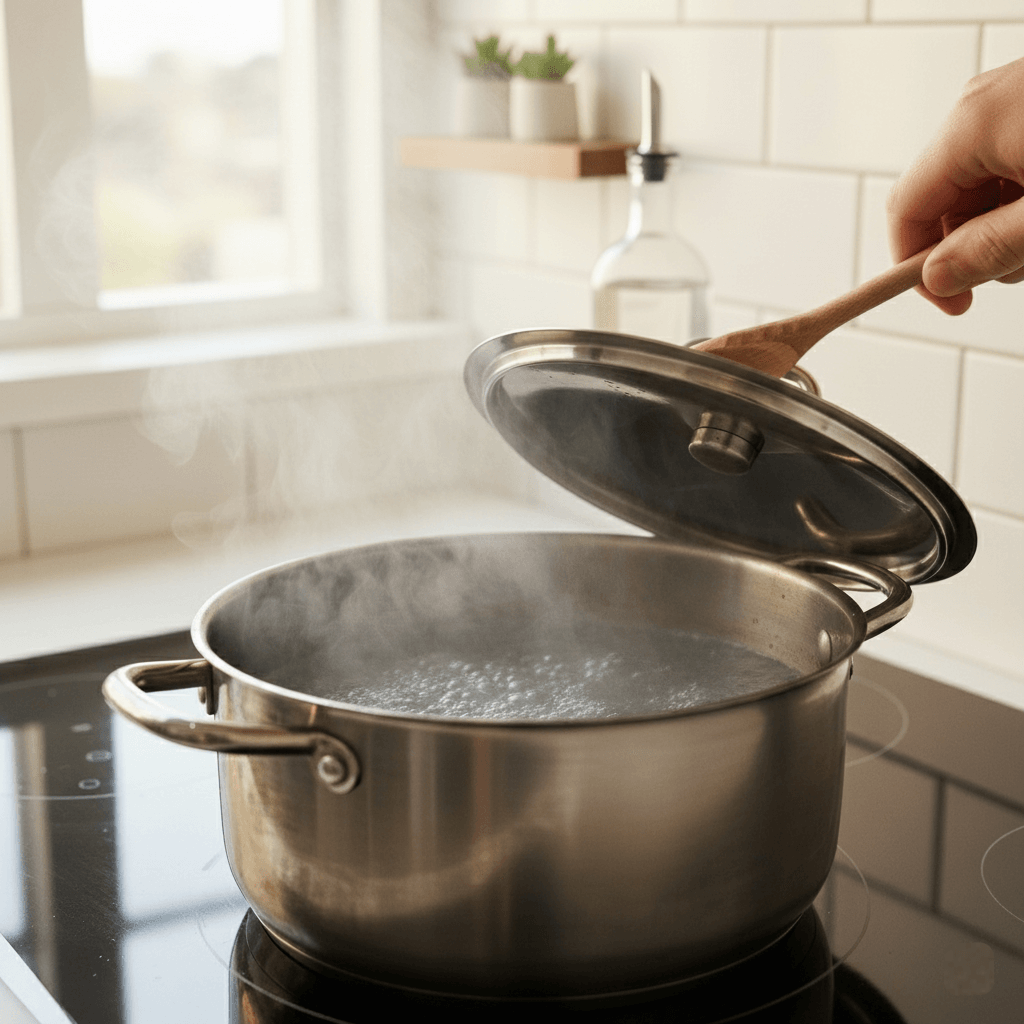
Vinegar contains acetic acid, which is excellent for dissolving tough, hardened food particles.
What You’ll Need:
- White Vinegar
- Water
Instructions:
- Fill the pot with equal parts water and white vinegar.
- Bring the solution to a boil.
- Important Tip: Place a lid on the pot while it’s boiling. This traps the steam and helps the acid work more effectively. It also prevents the strong vinegar smell from filling your entire home! (Though, opening it for a minute can act as a natural air deodorizer).
- After boiling for a few minutes, turn off the heat, let it cool, and wash as usual.
10. Lime & Salt Scrub
No vinegar? No problem. The citric acid in lime (or lemon) juice combined with the abrasive texture of salt creates a powerful, natural cleaning duo.
What You’ll Need:
- A lime or lemon
- Salt
Instructions:
- Squeeze the juice of a lime into the pot and add a few tablespoons of salt to create a slushy mixture.
- Let it sit for 10-20 minutes.
- Sprinkle more salt on top and use the squeezed lime half as a natural scrubber to work on the stains. The combination will lift the grime easily.
Your Cookware Can Be Saved!
With these 10 eco-friendly and affordable methods, you never have to say goodbye to a favorite pot again. Choose the method that works best with what you have on hand, and you’ll have your cookware looking spotless in no time.